German police say a man refused his seat next to a woman citing Sharia law, then admitted slapping a flight attendant after landing in Düsseldorf.
Story Highlights
- Police cite witnesses who heard the man invoke Sharia law to refuse his assigned seat.
- The suspect was detained after landing and admitted to the assault during questioning.
- Authorities say Sharia law has no legal standing in Germany; the case is a criminal probe.
- Reports note added charges for insulting officers in Turkish, widening the misconduct.
What Police And Witnesses Reported
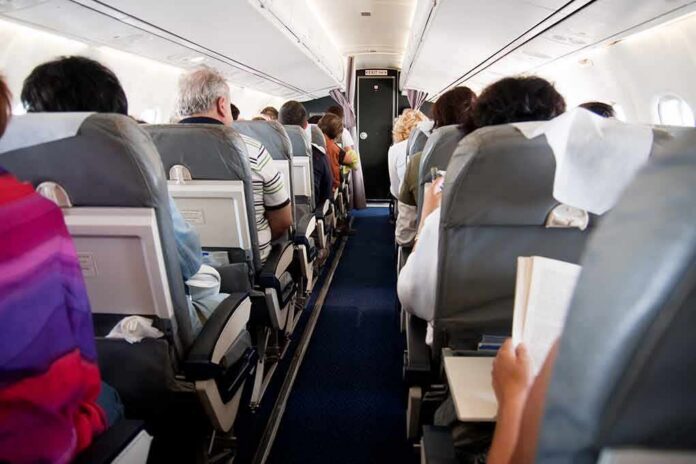
German police said the dispute began when a male passenger refused to sit next to a woman. Witnesses told officers the man cited Sharia law as his reason for rejecting the seat. The conflict escalated when crew tried to resolve the issue. The passenger later slapped a female flight attendant, according to police summaries of statements reported by German and English outlets. Officials said they took the suspect into custody as soon as the plane landed in Düsseldorf.
Authorities said the man admitted the assault during questioning right after landing. That admission places the act on record and narrows what is in dispute. Police also said the man insulted officers in Turkish, which added to the potential charges he faces. News coverage noted early confusion about the airline involved, but the core account from police and witnesses has remained consistent across reports.
Legal Status And Airline Authority In Germany
German law governs conduct on flights that land in Germany. Religious law does not have legal standing in these cases. Police and reporters stressed that the Sharia claim does not excuse noncompliance with crew orders or violence toward staff. Airlines hold clear authority to direct seating and ensure safety. When a passenger refuses lawful instructions or strikes crew, the matter becomes a criminal issue, not a religious accommodation dispute, according to the reporting.
Officials have not released a forensic report on the flight attendant’s injuries. That leaves the severity of harm unclear. But the admitted slap still supports possible charges under German criminal law. Police have not released full witness statements or the full interview transcript, so some context remains missing. Still, the account that the man invoked Sharia and refused to sit next to a woman, and then hit a crew member, is backed by witness statements and the suspect’s own admission.
Why This Incident Taps Shared Frustration
Airline cabins have become flashpoints for larger social tensions. Crews must keep order while honoring reasonable needs. Most people, left or right, agree on one bottom line: no one gets to hit staff. Many also worry that leaders cannot set clear rules and stick to them. When basic expectations on planes fail, it feeds a wider belief that systems are lax, confused, or politicized, and that ordinary people pay the price while elites face few consequences.
Past cases show how religious or cultural objections to seating can be raised. Sometimes crews accommodate a swap if it is calm and practical. But when a passenger refuses a seat and disobeys staff, the process breaks. This case tracks that pattern. Reports say no binding Islamic ruling was cited to prove a mandate to avoid women in public seating. Western systems have not upheld this claim as a right that overrides crew authority, and German police treated this as a criminal act, not a protected practice.
Open Questions And Next Steps
Key facts are set: the refusal, the claim of Sharia, the admitted slap, and the arrest. Questions remain about airline logs, alternate seat offers, and injury details. Police or the airline could release records that show when crew tried to move passengers, what orders were given, and how long the disruption lasted. A court filing would also clarify the final charges and any penalties if there is a conviction.
German police arrested a passenger after he allegedly refused to sit next to a woman on a flight, reportedly claiming that doing so would violate his interpretation of Sharia law. ‼️Authorities say that when a female flight attendant tried to resolve the situation, the man… pic.twitter.com/To9WsHICfZ
— Jade Warwick (@TheJadeWarwick) July 20, 2026
This story matters beyond one flight. People across the spectrum want rules applied fairly and fast, without favoritism. They want safe travel, respect across differences, and firm lines against violence. Clear standards protect both religious freedom and public safety. The evidence so far shows a passenger crossed that line. Strong, even-handed enforcement on the ground and in the air is how trust gets rebuilt, one flight at a time.
Sources:
thegatewaypundit.com, newsbreak.com