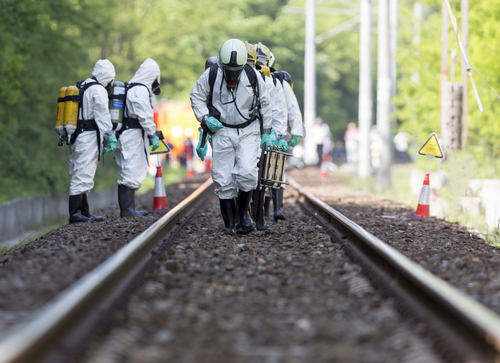
The World Health Organization has declared a new Ebola outbreak a “global health emergency,” and once again unelected international officials are in a position to influence how governments restrict travel, trade, and basic freedoms.
What Exactly Did the World Health Organization Declare?
The World Health Organization announced that the Ebola outbreak caused by the Bundibugyo virus in eastern Democratic Republic of the Congo and neighboring Uganda is a “Public Health Emergency of International Concern,” a legal term under international health rules that means the disease has crossed borders and may require coordinated action among countries.[2] The organization stresses that this situation does not meet its own criteria for a pandemic, contradicting some alarmist headlines calling it a new global crisis.[2][3]
World Health Organization figures and allied reporting describe a fast-moving situation with eight laboratory-confirmed cases in the region but several hundred suspected infections and around eighty to eighty-eight suspected deaths as of mid-May, numbers that have not yet fully stabilized as different agencies report slightly different totals.[1][5] The outbreak is centered in Ituri Province, across at least three health zones, and international spread has already been documented with cases reaching Kampala, Uganda after travel from Congo.[1][2]
How Dangerous Is the Bundibugyo Ebola Strain on the Ground?
Health officials identify the culprit as the Bundibugyo strain of Ebola, a less common variant that nonetheless carries a high fatality rate, with some experts citing prior outbreaks where roughly thirty to fifty percent of infected patients died.[1][4][5] Unlike the better-studied Zaire strain, which now has an approved vaccine, there is currently no licensed vaccine or specific therapeutic product for Bundibugyo, leaving doctors to rely on isolation and supportive care rather than targeted drugs or immunization.[4][5]
World Health Organization-linked reports warn that the real scale of this outbreak may be larger than the detected numbers, in part because conflict, displacement, and limited access in eastern Congo make it hard to find and test every suspected case.[1][3] Officials point to a three-week gap between an early suspected case and formal laboratory confirmation as evidence that some clinicians on the ground did not initially recognize Ebola, allowing additional transmission chains to form before strong infection-control measures were activated in local facilities.[3]
Travel Rules, National Sovereignty, and the Risk of Overreach
The World Health Organization’s own guidance for this emergency is focused on targeted controls: confirmed patients should be isolated in specialized treatment centers and barred from domestic and international travel until two negative tests, while those who had contact with patients should face movement restrictions for twenty-one days after exposure.[2] The agency recommends intensive screening at land borders and major roads for countries that share frontiers with the Democratic Republic of the Congo, but it explicitly advises against broad international border closures.[1][2]
Despite that relatively narrow prescription, global and regional media summaries repeatedly brand this a “global health emergency,” language that can fuel panic and open the door for governments or international actors to justify broader restrictions on travel, commerce, and everyday life than the evidence truly supports.[3][4] Conservative observers who remember how emergency rhetoric was weaponized during the coronavirus era are already warning that numerical uncertainty, shifting case counts, and early false reports—such as a Kinshasa case later ruled out—show why temporary alerts must not become a blank check for permanent bureaucratic control.[3]
What This Ebola Alert Means for Americans Watching From Afar
The current outbreak remains geographically focused in central Africa, and multiple experts emphasize that it is not a pandemic and does not pose an immediate mass-casualty threat to the United States, especially with today’s tighter border controls and more skeptical approach to international directives.[2][3] The real lesson for American families is less about personal infection risk and more about how quickly international institutions can pivot from limited data to sweeping declarations that shape economic decisions, travel policies, and civil liberties far from the original hotspot.
World Health Organization (WHO) has determined the Ebola virus disease (EBV) epidemic caused by the Bundibugyo Ebola virus (BDBV) in the Democratic Republic of Congo (DRC) 🇨🇩 and Uganda 🇺🇬 as a Public Health Emergency of International Concern (PHEIC) as defined in the provisions… https://t.co/xFCOfkaB1k
— Vera Ghali, MD (@veraghali) May 17, 2026
Conservative voters who value national sovereignty, transparent data, and proportionate responses can reasonably support serious assistance to African partners battling Ebola while still demanding hard proof before endorsing any restrictions that touch American citizens or the United States economy. That means pressing for full release of detailed World Health Organization situation reports, line lists of confirmed and suspected cases, and complete documentation of the emergency committee’s deliberations so that elected leaders—not distant technocrats—remain accountable for any policy that affects our freedom.[2][3]
Sources:
[1] Web – WHO Declares Ebola Outbreak in Congo and Uganda a Global …
[2] Web – Epidemic of Ebola Disease caused by Bundibugyo virus in the …
[3] Web – WHO declares Ebola outbreak a global public health emergency
[4] YouTube – WHO declares global health emergency over the Ebola outbreak in …
[5] Web – WHO Declares ‘International Emergency’ Over Ebola in DR Congo …