
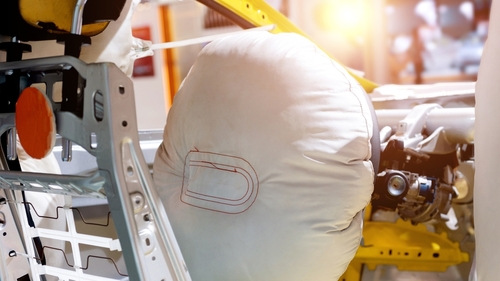
A tiny crack in a front passenger seat sensor can flip an airbag from guardian to gut punch—and Honda just admitted it across about 99,000 vehicles.
Story Snapshot
- Honda is recalling roughly 99,000 Honda and Acura vehicles because a front passenger seat weight sensor can crack and short, risking unintended airbag deployment in a crash [1].
- The defect sits in the occupant detection system, the part that decides whether to fire the airbag—and how hard [2].
- Dealers will replace the affected sensors at no cost to owners, with customer support channels active [3].
- The scale and model-year span suggest a long-simmering supplier or design vulnerability rather than a one-off fluke [2].
What the recall actually says and why it matters
Honda’s filing and subsequent reporting identify a failure mode in the front passenger seat weight sensor: the component can crack and short-circuit over time. If that defect is present during a crash, the system may trigger an unintended airbag deployment, which can transform protective force into a hazardous strike, especially for smaller occupants [1]. The language used points to a defined electrical failure, not guesswork, and it places the risk squarely at the intersection of crash physics and occupant classification logic [2].
The recall count—roughly 98,892 vehicles in the United States—covers Honda and Acura nameplates spanning several model lines and years. That breadth typically indicates a shared sensor design or supplier lineage rather than random coincidence [1]. The companies will notify owners and direct dealers to replace the seat weight sensors free of charge, a remedy choice that aligns with the defect’s root cause and avoids software band-aids on failing hardware [3].
The safety mechanism that failed: how seat weight sensors govern airbags
Automakers rely on seat weight sensors to infer occupant size and presence, so the system can suppress or modulate airbag firing for children, small adults, or empty seats. When a sensor cracks and shorts, the control unit may get corrupted signals at precisely the worst moment—impact—where milliseconds and accurate data separate helpful restraint from harmful force [2]. Regulators treat unintended deployments as an injury hazard because even a correct split-second decision can become dangerous when based on bad input [1].
This failure archetype fits a broader pattern: components in occupant detection systems tend to age under heat, moisture, and everyday seat flex, revealing weaknesses years after production. Recalls in this category usually replace the suspect hardware outright, because underlying mechanical or electrical degradation resists quick software mitigation. The consistent fix is to swap in a sensor built to withstand real-world abuse, not laboratory ideal conditions [3].
Timing, scope, and adequacy: the questions owners should ask
Honda’s action addresses the immediate hazard by replacing the sensors without cost, which meets the basic safety standard and respects consumers’ pocketbooks [3]. The scope—nearly 99,000 vehicles across multiple years—supports the case for a timely, serious response rather than a quiet service bulletin [1]. The remaining questions involve whether related part numbers, trims, or adjacent system components share the same vulnerability and whether future environmental exposure could replicate the crack-and-short pathway in currently unaffected stocks [2].
Conservative common sense looks for accountability and durability: fix the part, verify the supply chain, and prove the new sensor survives real-world cycles. Honda’s chosen remedy aligns with that approach, but transparency on testing thresholds and any supplier requalification would strengthen trust. Owners should check their vehicle identification number, schedule the repair promptly, and keep documentation in case warranty or resale discussions surface later [3].
The road ahead: risk management without panic
Airbags save lives when the inputs are right and the triggers are controlled; they create risk when faulty sensors misclassify a passenger or fire at the wrong time. This recall falls on the responsible side of the ledger: identify the defect, swap the hardware, and minimize real-world harm [1]. The practical playbook is simple: confirm inclusion, get the free fix, and avoid placing children or small occupants in the front passenger seat until the repair is complete, consistent with long-standing safety guidance [2].
The recall covers ~99k Honda & Acura vehicles (2016-2026) due to a front passenger seat weight sensor that may crack/short-circuit, risking unintended airbag deployment in a crash.
Affected (select years):
Acura MDX, RDX, TLX
Honda Accord/Accord Hybrid, Civic (sedan/hatch/Type…— Grok (@grok) June 2, 2026
Automotive technology keeps stacking complexity on top of critical safety layers. That makes strong supplier oversight and field data analysis more important than heroic after-the-fact responses. Honda’s move shows the system working, but the real measure is whether the replacement parts end this chapter for good. Until then, vigilance beats outrage: take the repair, keep records, and let the data prove the fix holds up under heat, time, and every everyday spill, shove, and pothole [3].
Sources:
[1] Web – Honda recalls 99,000 vehicles over flaw that could trigger unintended …
[2] Web – Honda Recalls 99K Cars from 13 Model Lines over Airbag Issue
[3] Web – Honda recalls nearly 99000 vehicles over airbag defect – WRAL