Iran declared the Strait of Hormuz closed — again — just three days after it reopened, but the U.S. military says ships are still moving and the waterway remains open.
Quick Take
- Iran’s military announced it closed the Strait of Hormuz on June 20, blaming Israeli strikes in Lebanon as a violation of the U.S.-Iran peace deal.
- U.S. Central Command flatly rejected the claim, reporting that 55 merchant ships transited the strait that same day, carrying over 17 million barrels of oil.
- Vice President JD Vance told Fox News there is no evidence the strait is actually closed, and ship-tracking data backed him up.
- The standoff is happening as U.S. and Iranian negotiators head to Switzerland for nuclear talks — raising the stakes on both sides.
Iran’s Closure Claim — Words vs. Reality
Iran’s top military command announced Saturday that the Strait of Hormuz was closed, calling it retaliation for what it described as a “blatant breach” of the recently signed U.S.-Iran memorandum of understanding. Iran’s Islamic Revolutionary Guard Corps Navy echoed the order, warning ships to stay away. The announcement came just three days after the strait had reopened following months of conflict that began in late February 2026.
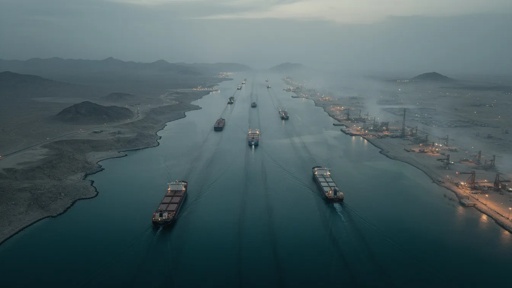
The U.S. military told a very different story. U.S. Central Command reported that commercial ship traffic actually increased on June 20. Fifty-five merchant ships passed through the strait, moving more than 17 million barrels of oil to global markets. Ship-tracking data confirmed vessels were still sailing. No shipping incidents were reported. Central Command stated plainly that “safe passage through the international waterway remained intact.”
The U.S. Pushback — and What’s at Stake
Vice President Vance pushed back hard during a Fox News interview, saying there is no evidence Iran has actually closed the strait. A senior U.S. defense official added that American forces saw no Iranian military movements suggesting a real closure was being enforced. Central Command said U.S. forces remained “present and vigilant” to protect freedom of navigation and ensure the peace agreement holds.
The Strait of Hormuz carries roughly 20 percent of the world’s oil supply. When the crisis first erupted in late February — after U.S. and Israeli strikes on Iran — traffic collapsed by more than 95 percent and oil prices shot toward $120 a barrel. The International Energy Agency called it the largest oil supply disruption in history. Today, traffic is recovering but still well below normal levels, making Iran’s repeated closure threats a serious economic weapon.
Iran’s Leverage Play — A Pattern of Pressure
Iran’s latest move fits a familiar pattern. Throughout the 2026 conflict, Tehran repeatedly announced closures, then partially enforced them — throttling traffic rather than shutting the strait completely. At one point, the Islamic Revolutionary Guard Corps even charged transit fees for “safe passage,” turning the chokepoint into a tollbooth. Britannica notes the strait has never been truly closed, even during the worst of the fighting, though threats alone drove away most ships.
Despite renewed closure of the Strait of Hormuz following Sunday’s escalation after Iran shut the waterway in response to strikes in Lebanon, Philippine Energy Secretary Sharon Garin said fuel prices are set to decline this week. pic.twitter.com/Ay3WzQJtpL
— Balita Kwento Serbisyo (@BKS_SFTS) June 22, 2026
Iran’s announcement landed the same day its negotiating team — led by Parliament Speaker Mohammad Bagher Ghalibaf and Foreign Minister Abbas Araghchi — headed to Switzerland for nuclear talks with American officials. Iran’s foreign ministry said the delegation would demand the U.S. fulfill its commitments under the peace deal. The timing makes clear Tehran is using the closure threat as leverage at the bargaining table, not necessarily as a military action it intends to fully enforce.
What It Means Going Forward
The pattern here is worth understanding. Iran says the strait is closed. Ships keep moving. The U.S. military stays in place and keeps the lane open. Then talks continue. Iran has done this multiple times since February — open, closed, open, closed. Each announcement rattles oil markets and gives Tehran something to trade in negotiations. The real question is whether the peace deal holds and whether the nuclear talks in Switzerland produce anything concrete. For now, the strait is open — and America’s military presence is the reason why.
Sources:
[2] Web – Iran closes Strait of Hormuz, blames US for breaching deal
[3] Web – Iran says it is closing Strait of Hormuz over Israeli attacks …
[4] Web – Iran announces plans to close the Strait of Hormuz …
[5] Web – 2026 Strait of Hormuz crisis
[6] YouTube – Iran closes Strait of Hormuz, accusing US and Israel …
[7] Web – New Strait of Hormuz Closure Announcement Threatens …
[8] Web – Iran war: What is the Strait of Hormuz and why does it matter?
[9] YouTube – Iranian Revolutionary Guard declares Strait of Hormuz closed
[10] YouTube – Iran uses Strait of Hormuz closure as leverage in …
[11] Web – US Central Command confirmed that commercial ship traffic through …
[12] Web – Commercial Vessels Flow Through Open Strait of Hormuz – centcom
[13] Web – US Central Command confirmed that commercial ship traffic through …
[14] Web – The Strait of Hormuz is splitting into U.S. and Iranian lanes as ship …
[15] Web – BREAKING : U.S. Central Command REJECTS Iran claims that they …
[16] Web – Hormuz tanker traffic unchanged after US‑Iran deal – Argus Media
[17] Web – Iran War Shipping Update – June 1, 2026 | UANI
[18] YouTube – Iran shuts Strait of Hormuz amid peace deal dispute | 7NEWS
[19] Web – The MarineTraffic tracker showed vessels sailing in the Strait of …
[20] Web – Lessons from the Strait of Hormuz crisis
[21] Web – Strait of Hormuz | Map, Importance, Conflict and Closure, Control, Oil …
[22] Web – The Strait of Hormuz in 8 Charts – CSIS
[23] YouTube – A closer look at shipping traffic through the Strait of Hormuz with …
[24] Web – “This is the first time ever in the written history of the Strait of …
[25] Web – The State of the Strait: The Role of Hormuz in the Middle East War …