
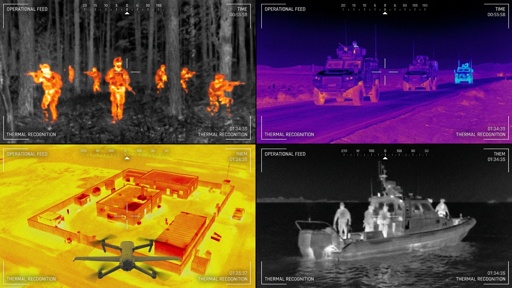
The U.S. Army’s Mad Scientist Initiative is preparing America’s military for future threats through a virtual think tank that crowdsources ideas about warfare in 2034 and beyond, bypassing traditional bureaucracy to tap into cutting-edge technological insights.
Virtual Think Tank Replaces Traditional Lab Model
The Army Mad Scientist Initiative operates under the Training and Doctrine Command as a community of action rather than a conventional research facility. Director Lee Grubbs leads a core team of five civil servants and contractors who function as connective tissue between diverse networks spanning academia, industry, and government. This lean structure multiplies analytical capacity by tapping external expertise from institutions like Georgetown University, SRI International, and Georgia Tech. The initiative explores disruptive technologies including robotics, autonomy, artificial intelligence, cyberwarfare, megacities, biology, neurology, and material sciences that will shape future operational environments.
Crowdsourcing Military Strategy for Great Power Competition
The initiative conducts monthly online calls for ideas and hosts conferences such as the recent “Game On! Wargaming & the Operational Environment” event with Georgetown University’s Wargaming Society. Planning for 2025 includes a writing contest focused on Great Power Competition and Conflict, designed to crowdsource perspectives on how current conflicts shape Army requirements through 2034. This approach represents a departure from reactive military planning, instead anticipating technological disruptions before they become operational realities. The Mad Scientist Laboratory blog features guest contributions from experts like Dr. David Kilcullen, a bestselling author specializing in unconventional warfare.
Unclassified Collaboration Drives Innovation
Operating at approximately 80% unclassified enables the initiative to foster partnerships that would be impossible under traditional classification restrictions. This openness strengthens innovation transfer between military institutions and civilian research centers while maintaining operational security for sensitive information. The program publishes full conference reports, maintains an active podcast series called “The Convergence,” and makes video presentations available through the Army Portal for Army Networks. The initiative’s operational motto emphasizes evidence-based analysis with the phrase “show me the data,” grounding forward-looking speculation in empirical research.
From Past Deployments to Future Preparedness
The original Mad Scientist program ran from 2000 to 2010 before continuous deployments in Afghanistan and Iraq forced its discontinuation. When relaunched in 2015, the initiative shifted toward a network-based model leveraging external partnerships rather than centralized research capabilities. This evolution reflects lessons learned about maintaining strategic foresight even during operational demands. Research targeting 2034 and 2050 timeframes directly influences how the Army plans force structure, training, and doctrine. Despite its small core team, the initiative shapes military strategy by ensuring America’s forces stay ahead of emerging threats and opportunities in an increasingly complex technological landscape.
Sources:
Army Mad Scientist continues its goal: Assess and analyze operational environment – DVIDS
Who Are the Army’s Mad Scientists? – GovCIO Media & Research
TRADOC’s Army Mad Scientist Initiative Describes the Future Battlefield – ClearanceJobs
Maddest Guest Blogger 2024 – Mad Scientist Laboratory