
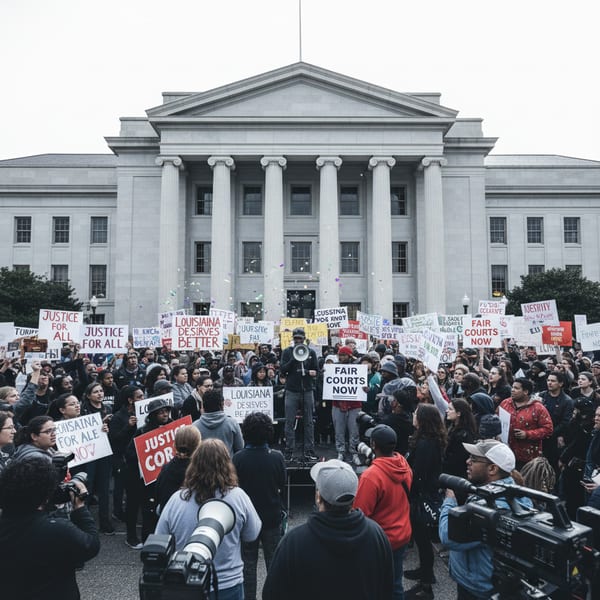
Louisiana Governor Jeff Landry announced the suspension of the state’s May primary election following a Supreme Court decision that struck down the state’s congressional map as an unconstitutional racial gerrymander, forcing lawmakers to redraw district boundaries before voters can cast ballots.
Supreme Court Strikes Down Redistricting Map
The Supreme Court delivered a significant ruling on Louisiana’s congressional map, with Justice Sam Alito writing for the majority that the current map constitutes an unconstitutional gerrymander. The decision found that evidence of racial disparity used to justify race-based districting in the 2022 map was insufficient. Alito stated clearly that the map violates constitutional rights and cannot be used for upcoming elections. This marks a major shift in how courts evaluate redistricting claims based on racial considerations.
Governor Jeff Landry plans to suspend next month’s primary elections so state lawmakers can pass a new congressional map, the Washington Post reported.
— WBRZ News (@WBRZ) April 30, 2026
Read more: https://t.co/QehdIYpwk0 pic.twitter.com/68nuf01iN4
Governor Landry, a Republican, responded swiftly to the high court’s decision by announcing plans to postpone the scheduled May primary. The suspension gives the Louisiana legislature necessary time to craft a new congressional map that complies with the Supreme Court’s constitutional requirements. State lawmakers now face the urgent task of redrawing district boundaries while meeting federal standards and addressing the court’s concerns about improper use of racial data in the redistricting process.
Constitutional Questions and Redistricting Authority
The case highlights ongoing tensions between state redistricting authority and federal constitutional protections. The original 2022 map was drawn using racial disparity evidence that the Supreme Court ultimately determined fell short of constitutional standards for race-conscious districting. This ruling reinforces limits on when states can consider race as a factor in drawing congressional boundaries, even when attempting to address historical inequities or comply with voting rights considerations.
Impact on Louisiana Voters and Elections
The primary suspension creates uncertainty for Louisiana voters and candidates who were preparing for May elections. State legislators must now convene to draft new district maps that satisfy the Supreme Court’s requirements while maintaining representation standards. The delay underscores the complex balance between state sovereignty in election administration and federal oversight of constitutional rights. Louisiana voters will need to wait for lawmakers to complete the redistricting process before primary elections can proceed under a constitutionally compliant congressional map that respects individual rights without improperly using racial classifications.