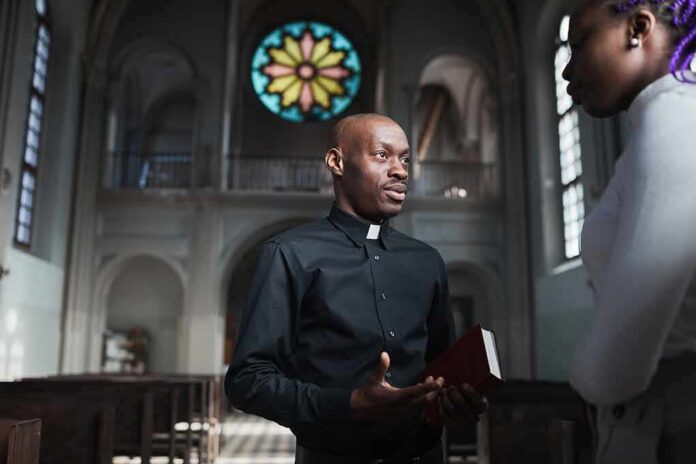
A Catholic priest in the Central African Republic was shot dead by armed men near his parish, one day after baptizing scores of new believers, underscoring the grave danger facing Christians in conflict zones.
Story Highlights
- Armed men killed Father Crépin Martial Monga near his residence in Zémio on June 29.
- Reports say he baptized a large group shortly before his death; motive remains unclear.
- Diocesan and Catholic outlets remember him for peace and mediation work.
- Authorities have not identified the attackers or confirmed a motive.
Confirmed Killing Near Parish Residence in Zémio
Church sources reported that Father Crépin Martial Monga was shot and killed on June 29 near his residence at St. John the Baptist Parish in Zémio, in southeastern Central African Republic. Coverage identifies him as a priest known for service and reconciliation in the Diocese of Bangassou. Reports state he was attacked by armed men outside or near the rectory area. Local Catholic reporting did not name suspects and did not provide a confirmed motive at this stage.
Multiple Catholic outlets said Father Monga had engaged in efforts to calm tensions and support local dialogue. Accounts stressed his role as a messenger of peace to communities strained by years of violence. Those tributes show his ministry reached both church members and neighbors who sought relief from recurring conflict. While those profiles help explain his standing in the town, they do not resolve who planned the attack or why it occurred, which remains an open question.
Reports Link Death to Recent Baptisms, but Motive Not Established
Some reports circulated that Father Monga baptized a large group of new believers shortly before he was killed. That claim has drawn wide attention on social media and in commentary. However, precise investigative links between that event and the killing have not been released by authorities. The press that first elevated the baptism detail framed the gunmen as unidentified and did not present confirmed perpetrator attribution or official motive statements at this time.
Other Catholic reporting on the homicide focused on the date, place, and circumstance of the shooting and emphasized that responsibility had not been assigned. That coverage cited the lack of a claim of responsibility and the absence of detailed police disclosures. It described Father Monga’s pastoral and peacemaking work, including local mediation roles, without asserting a cause for the killing. This distinction matters because early conflict reports often note facts of death but cannot yet say who or why.
Pattern of Unclear Attribution in Conflict-Zone Attacks
Initial reports from fragile security areas often confirm that a cleric was killed but do not identify the attackers or a motive for weeks, if ever. That is common in the Central African Republic, where armed groups operate, communications are limited, and police capacity is strained. Church statements and community memorials tend to arrive first, while formal investigations move slowly. Readers should separate the verified timeline from unproven theories until officials release evidence-backed findings.
A 36-year-old Catholic priest known for his peace initiatives in the Central African Republic was killed by gunmen just one day after baptizing 175 people.
Father Crépin Martial Monga, vicar of St. John the Baptist Parish in Zémio in the Diocese of Bangassou, was shot dead on… pic.twitter.com/8aRfNFGnOE
— ChurchPOP (@Church_POP) July 21, 2026
For American readers, the lesson is clear: stand firm for religious freedom, demand facts, and insist on accountability for crimes against faith communities. The United States can continue to support pressure on regimes and militias that target people for their beliefs, while guarding our own First Amendment rights at home. Protecting worship from violence and intimidation is not optional. It is central to human dignity, civil order, and the values our Constitution defends.
Sources:
pjmedia.com, ncronline.org, catholicworldreport.com