
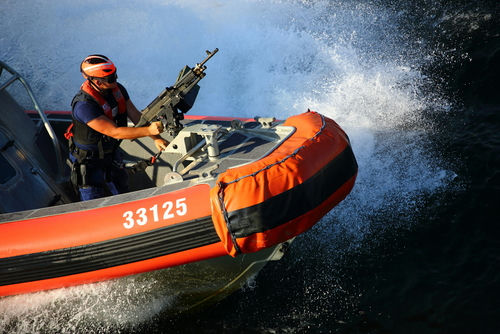
A fast-expanding Pentagon campaign to blow up suspected drug boats at sea is now raising the same old question many Americans on the right and left keep asking: who is really in charge when our government kills people in our name?
From Drug Busts to Remote Killings at Sea
For decades, U.S. maritime drug enforcement focused on Coast Guard chases, boarding parties, arrests, and courtroom trials. Operation Southern Spear, launched under President Trump’s second term, marks a sharp break from that tradition. Starting with a September 2025 strike on a Venezuelan boat that killed 11 men, the U.S. military began using air‑dropped munitions to sink suspected smuggling vessels in the Caribbean and Eastern Pacific, often far from any battlefield and without public evidence tying each crew to specific crimes.
Southern Command now reports at least 47 strikes on 48 boats, with roughly 163 people dead or missing and presumed dead. Officials say these craft traveled along “known narco‑trafficking routes” and were operated by cartels and designated terrorist organizations. They emphasize radar tracks, patterns of movement, and occasional debris fields as indicators of drug activity. But they rarely release cargo photos, names, or detailed intelligence, leaving ordinary Americans to take lethal designations largely on faith.
Thirteen Names Put Human Faces on a Secretive War
A recent Guardian investigation identified 13 men killed in several of these boat strikes, drawing on local reports, death records, and interviews with families. Relatives and community leaders describe some victims as small‑scale fishers or informal transport workers rather than hardened cartel lieutenants. Their stories echo earlier claims from Latin American governments and coastal communities that not everyone aboard the destroyed vessels was involved in organized crime, despite Washington’s insistence that all dead were “male narco‑terrorists.”
U.S. officials counter that the operation has disrupted trafficking networks and that crews knowingly assume risk by entering smuggling corridors. Still, the pattern is troubling for Americans who believe in due process, clear rules of engagement, and honest government. When the Pentagon can kill foreigners at sea based on secret intelligence, while disclosing little beyond edited strike footage and broad labels, it feeds a sense that unaccountable agencies—not voters—are quietly shaping U.S. policy, far from constitutional checks and balances.
Legal Gray Zones and Fears of a “No‑Quarter” Mindset
SOUTHCOM publicly frames Operation Southern Spear as part of a war on “narco‑terrorists,” borrowing language from counter‑terrorism battlefields. Yet these strikes occur outside any formally declared war and far from traditional combat zones. International law typically restricts the deliberate killing of shipwrecked or surrendering personnel, and human rights advocates question whether sinking boats outright, without attempting capture, effectively turns drug enforcement into a form of offshore capital punishment with no trial and no appeal.
The concern is not theoretical. Earlier reporting on related strikes described incidents where survivors of initial blasts were hit again as they clung to wreckage, prompting lawmakers and legal scholars to warn that “no quarter” tactics could constitute war crimes if confirmed. U.S. commanders brief Congress that there is no explicit order to “kill them all” or deny mercy, but the thin line between disabling a vessel and ensuring no crew survives remains largely hidden behind classification, deepening mistrust across the political spectrum.
Why Conservatives and Liberals Are Both Alarmed
Many conservatives support getting tough on cartels that flood American communities with fentanyl and cocaine. But they also worry about a federal government that grows more secretive, powerful, and detached from constitutional limits each year. A campaign that lets unelected security officials kill dozens of unnamed foreigners, possibly including civilians, without transparent rules or robust congressional oversight looks like one more example of the permanent bureaucracy operating on autopilot, far beyond the original mandate voters thought they were endorsing.
Many liberals, meanwhile, focus on civilian deaths, regional destabilization, and the export of drone‑war tactics into yet another theater. They see patterns from past conflicts repeating themselves: anonymous “military‑age males” labeled as militants, foreign leaders’ concerns dismissed as baseless, and local families left to pick up the pieces with little hope of accountability. The identification of 13 dead men as “flesh‑and‑blood people,” rather than nameless narco‑terrorists, crystallizes that unease and underscores how easily human beings can be reduced to targets on a screen.
Accountability, American Values, and the Road Ahead
For citizens who still believe in ordered liberty and equal justice under law, the key issue is not whether Washington should fight drug cartels—it should—but how it does so, and who answers when things go wrong. A government that can quietly erase scores of people on the high seas, release curated video, and offer little else is a government drifting away from the founding principles of transparency, limited power, and respect for human dignity that once distinguished the United States from the regimes it criticized.
13 men killed by US military boat strikes identified: ‘These were flesh-and-blood people’ | US military | The Guardian https://t.co/Q1Vmx08io2
— NewYorkistanian (@fawzianaqvi1) May 15, 2026
Real oversight would mean Congress pressing for unedited footage, clear rules of engagement, independent casualty reviews, and regular public reporting—steps that protect both innocent lives and the honor of U.S. service members asked to carry out these missions. As the names and faces of the 13 identified men circulate worldwide, Americans on the right and left face a hard question: will they demand that their government’s growing power to kill abroad be chained once again to the country’s oldest promises of law, restraint, and accountability?
Sources:
11 killed in US military strikes on 3 alleged drug-smuggling boats: Southern Command
United States strikes on alleged drug traffickers during Operation Southern Spear