
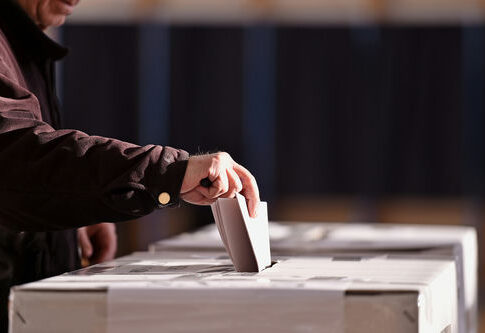
The Supreme Court’s mail-in ballot ruling lets late-arriving votes count, while brushing past two centuries of election-day practice that many conservatives see as a guardrail against chaos and fraud.
Story Snapshot
- Supreme Court says federal law allows states to count mail ballots that arrive after Election Day if they are postmarked by that date.
- Justice Amy Coney Barrett and Chief Justice John Roberts joined three liberal justices in a 5–4 majority, splitting conservatives on a core election issue.
- Justice Samuel Alito’s dissent warns the ruling clashes with long-standing election law that treated Election Day as the deadline for ballots to be received and counted.
- State-level grace periods, including Mississippi’s five‑day window, now stand unless Congress steps in to tighten national rules.
What The Court Actually Decided On Mail-In Ballots
Justice Amy Coney Barrett wrote the majority opinion in Watson v. Republican National Committee, upholding Mississippi’s rule that mail-in ballots postmarked on or before Election Day can be counted if they arrive within five business days. The Court said federal election-day statutes set the day voters must cast their ballots, but do not set a hard deadline for when officials must receive them. That means states can choose to accept timely mailed ballots that arrive later, as long as state law clearly allows it.
The majority stressed that the case was narrow and did not force any state to use grace periods. States that already require ballots to arrive by Election Day can keep those rules. The Court only answered one question: whether federal law blocks states from counting ballots cast on time but delivered late. On that point, the justices in the majority said the answer is no, giving states wide control over ballot receipt deadlines, including for mail voting.
How Mississippi’s Grace Period And 30 Other States Are Affected
Mississippi law lets absentee voters mail ballots that are postmarked on or before Election Day and received by the registrar up to five business days afterward. The Supreme Court noted Mississippi is one of roughly 30 states that already count some absentee ballots that arrive after Election Day when they were mailed on time. By upholding Mississippi’s system, the Court kept similar grace periods in many states and territories in place, including special rules that help military and overseas voters cope with mail delays.
Supporters of the ruling argue it protects voters who rely on the mail because of distance, disability, or lack of polling places. They say people should not lose their voice because the Postal Service is slow, especially when they followed the law and mailed their ballot by Election Day. Nonprofit groups praise the decision for respecting state power to set “reasonable” receipt windows and for avoiding last-minute changes to election rules before the 2026 midterms. For election officials, the ruling means they can keep using systems they already know instead of scrambling to rewrite procedures.
Alito’s Dissent And The Fight Over Election Day’s Meaning
Justice Samuel Alito, joined by Justices Clarence Thomas, Neil Gorsuch, and Brett Kavanaugh, issued a sharp dissent that should matter to conservatives. He argued the decision is “inconsistent” with the text of the election-day statutes, basic election-law principles, and “two centuries of historical practice” that treated Election Day as the deadline for ballots to be both cast and counted. In his view, if ballots received after Election Day change the outcome, then the electorate’s choice is not truly made on Election Day at all.
Alito framed the case as a question of federal preemption: whether national election-day rules override state grace periods. He warned that letting ballots trickle in for days risks undermining trust and invites disputes over late votes, even if there is no proven fraud spike yet. The majority did not fully answer his plain-language concern about what “Election Day” means, leaning instead on statutory interpretation that focuses on when votes are cast, not received. That gap leaves room for future challenges and keeps the debate over Election Day’s true meaning wide open for conservatives and lawmakers.
Why This 5–4 Split Matters For Conservatives And For Congress
The lineup in Watson is striking: Barrett and Roberts sided with three liberals to form the five‑justice majority. Many conservative voters who backed these justices to tighten election rules now see a Court that is willing to leave mail-in ballot deadlines largely to the states. Media outlets quickly branded the ruling a “big win for democracy” and a defeat for President Donald Trump, feeding the narrative that efforts to demand stricter mail deadlines are about “restricting voting,” not protecting election integrity.
Supreme Court Protects Mail Voting & Preserves states authority over ballots
Source: American Civil Liberties Union https://t.co/pQuVjnGvJW— kym dusek (@KymDusek) July 8, 2026
The majority opinion admits Congress could step in and set national receipt deadlines, including ending grace periods, but says that question was not before the Court. That means the real battle now moves to Capitol Hill. Bills like the SAVE Act and similar proposals backed by conservatives could define Election Day in federal law as both the casting and receipt deadline, closing the loophole the majority just opened. Until Congress acts, however, states will keep broad power over when mail ballots must arrive, and that should put election rules squarely on the Trump administration’s agenda.
Sources:
theamericanconservative.com, supremecourt.gov, thearc.org, facebook.com, lwv.org, law.cornell.edu