British commandos just stormed a Russian “shadow fleet” oil tanker in the English Channel, raising big questions about real security, energy policy, and whether this is smart enforcement or political theater.
Story Snapshot
- Royal Marines and UK agents boarded and detained a Russian-linked “shadow fleet” tanker in a six-hour night raid.
- The UK government claims the move strikes at Russian war funding but shows no hard numbers to prove real impact.
- Key legal details, ship ownership records, and cargo value are still hidden from the public.
- The tanker is now held off England’s south coast while investigations drag on, with critics warning this could be more optics than outcome.
British Commandos Hit a Russian-Linked Tanker in the Channel
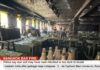
Royal Marine Commandos, backed by the National Crime Agency and British air and naval assets, boarded a Cameroon-flagged oil tanker called Smyrtos in the English Channel during the early hours of Sunday morning.[1] Officials say the ship is part of Russia’s “shadow fleet,” used to move sanctioned oil that helps fund the war in Ukraine.[1] Video shows helicopters, fast-roping Marines with rifles, and armed officers securing the deck in a six-hour operation.[2]
Prime Minister Keir Starmer personally ordered the intercept and then promoted it as a major success.[2] He claimed the boarding “delivers yet another blow to Russia” and said the goal was to “disrupt the funding source” of the war.[1] The Ministry of Defence called it the first United Kingdom–led operation of its kind, stressing that new powers passed earlier this year gave armed forces the green light to board sanction-linked vessels in the Channel.[2]
A Show of Force, But What Was Really Achieved?
British officials say the tanker was detained, its crew secured, and the vessel moved toward anchorage off the south coast of England for investigation.[1] Royal Marines, National Crime Agency officers, and Royal Air Force aircraft, including a P-8 surveillance plane, took part alongside Royal Navy ships HMS Sutherland and HMS Ledbury.[1] The forces clearly showed they can act, but officials have not shared proof of seized cargo, forfeited profits, or long-term loss for Russia’s war chest.
So far, there is no public data on the value of the oil on board, the money at stake, or whether the shipment will be blocked permanently.[2] Reports say the ship will be “held and monitored” as investigators dig into ownership and sanctions links, but that is very different from a clear seizure or sale of the cargo.[2] Without numbers and legal filings, this looks like a solid tactical operation whose real economic impact on Moscow is still unknown.
Legal Gray Areas and Identity Confusion Cloud the Narrative
Coverage says the raid relied on new United Kingdom sanctions-enforcement powers and that the Prime Minister had previously signaled he would use them to board Russian-linked tankers.[1] However, the public has not seen the actual boarding order, legal memorandum, or warrant used to justify entering the vessel in international or near-UK waters. That gap leaves room for questions about the exact legal basis, especially if Russia or the ship’s owners push back later in court or in global forums.
Even basic details about the ship are fuzzy in public reporting. Different outlets and captions refer to the vessel as “Smirnoff,” “Smyrtos,” or “Smurtos,” even though they appear to mean the same tanker.[2] That confusion does not erase the boarding itself, which is well documented on video, but it does weaken the government’s messaging and gives critics a way to question how carefully the case has been built. Clear identity, registry, and ownership records have not yet been shared with voters.
Shadow Fleet Crackdowns: Real Pressure or Political Theater?
This raid fits a pattern seen in sanctions enforcement around the world: leaders highlight dramatic maritime operations to show resolve, while hard evidence of lasting financial pain is harder to find. Analysts point out that Russia’s shadow fleet can reflag ships, hide ownership, spoof tracking data, and shift oil to other tankers, which makes stopping one vessel more of a warning shot than a war-ending move. Even a successful boarding does not prove that wider Russian oil flows have dropped in a serious way.
British forces intercepted the Smyrtos, a Cameroon-flagged oil tanker believed to be part of Russia’s sanctions-evading “shadow fleet,” in the English Channel on 14 June 2026. Royal Marine commandos boarded the tanker by helicopter, with support from the National Crime Agency,… pic.twitter.com/LxinWDiwVb
— Pete (@splendid_pete) June 14, 2026
Earlier this year, Britain drew criticism after it allowed another Russian shadow fleet tanker to pass through the Channel with little challenge, even as it carried oil to Cuba. That history makes this new operation look like a sharp change in posture—and also raises the risk that it becomes a one-off stunt unless followed by a steady campaign. For Americans watching from across the Atlantic, the lesson is clear: tough images on television do not always equal strong, consistent policy that truly cuts off hostile regimes from energy cash.
Sources:
[1] Web – UK armed forces board Russian shadow fleet tanker in English …
[2] YouTube – UK armed forces seize Russian shadow fleet tanker in …