
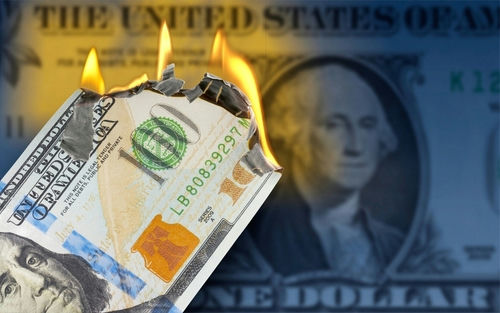
Wholesale prices just jumped at the fastest pace since 2022, and the warning lights on inflation are flashing bright red for every American family watching their budget.
Story Snapshot
- Producer prices jumped 1.1% in May and 6.5% over the past year, both hotter than expected.
- Almost all of the surge came from goods, with energy costs — especially gasoline — exploding higher.
- Core producer inflation, stripping out food, energy, and trade margins, is running at its hottest pace since 2022.
- Sticky wholesale inflation now threatens hopes for lower rates and cheaper prices under Trump’s second-term recovery.
Producer Prices Spike, Re-Igniting Inflation Fears
The federal government’s own data now show that price pressures deep in the economy are heating back up, not cooling down. The Bureau of Labor Statistics reported that the Producer Price Index, which tracks prices businesses receive for their goods and services, rose 1.1 percent in May from the prior month, once again beating forecasts that called for a much smaller gain.[3] Over the past year, producer prices are up 6.5 percent, the biggest increase since late 2022, and well above what markets expected.[4]
This is not a one-off blip. May’s jump matches the strong increase first seen in April and follows a string of monthly gains, signaling that pipeline inflation is becoming embedded in the cost structure of the economy.[3] For families, producer prices may sound distant, but they are the starting point for the prices you pay at the store, at the pump, and on your utility bills. When the wholesale level runs this hot, it becomes much harder for consumer inflation to drift gently back down.
Energy and Goods Costs Drive the Surge
The most alarming part of the May report is where the inflation is coming from. Nearly eighty percent of the entire monthly increase in final demand prices came from goods, not services, showing a real cost shock rather than a small statistical quirk.[3] Goods prices rose 2.8 percent in a single month, the largest rise since the data series began in 2009, with the government noting that the advance was broad-based across the production pipeline.[3]
Energy is at the center of this storm. Official tables show final demand energy prices jumping 10.7 percent in May, with more than half of the overall goods spike coming from gasoline alone, which soared 23.4 percent at the wholesale level.[3][4] Diesel fuel, jet fuel, industrial chemicals, plastic resins, and natural gas liquids also climbed sharply.[3] When energy and input chemicals rise like this, every part of the real economy — from trucking and airlines to farming and manufacturing — feels the squeeze and eventually pushes those higher costs onto consumers.
“Core-Core” Inflation Shows Pressure Is Spreading
Some analysts try to calm nerves by pointing to slower growth in services, which rose only 0.3 percent in May, down from April.[4] But a closer look at the “core-core” measure — final demand prices excluding food, energy, and trade services — tells a more troubling story. That index jumped 0.8 percent in May alone and is up 5.1 percent over the past year, the largest 12‑month rise since 2022.[3][8] This signals that price pressure is spreading beyond just volatile energy and food categories.
Intermediate demand data, which track prices earlier in the supply chain, back up this concern. Processed goods for intermediate demand rose 3.5 percent, tying the biggest increase on record, again driven heavily by energy inputs.[1] Unprocessed goods for intermediate demand climbed 4.9 percent, with about half of that coming from unprocessed energy materials.[1] Services for intermediate demand also increased, though at a slower pace.[1] Together, these numbers show higher costs are working their way from raw materials to factories to wholesalers, setting the stage for future consumer price increases.
What It Means for Rates, Retirements, and Family Budgets
The Federal Reserve focuses mainly on consumer inflation, but it cannot ignore a producer price index running at 6.5 percent year over year.[4] Market data show that the May spike beat expectations on both a monthly and annual basis, softening hopes that the Fed could cut interest rates quickly without reigniting inflation.[4] Research notes that the components that feed into the Fed’s favorite inflation gauge, the core personal consumption expenditures index, also came in hotter than expected.[1] That raises the odds that borrowing costs stay higher for longer.
A 6.5% PPI (producer price index — wholesale inflation) print led by energy sets up a 6-12 month CPI transmission lag. Manufacturers absorb energy cost increases for a quarter, then pass them through in contract pricing. The Fed's problem: rate hikes address demand-pull inflation…
— Derrick Dao (@derrick_dao) June 14, 2026
Higher-for-longer rates hit Main Street hard. Families already battling years of inflation driven by past overspending now face steeper mortgage costs, pricier car loans, and stubborn credit card rates. Small businesses that survived shutdowns and supply shocks must swallow higher energy and material costs while paying more to finance inventory and equipment. Producer inflation may sound like an abstract metric from Washington, but its real-world impact lands on conservative, working, and middle‑class households that play by the rules and simply want stable prices and honest money.
Sources:
[1] Web – The Inflation Sh*t Is Hitting The Fan
[3] Web – [PDF] Producer Price Indexes – May 2026 – Bureau of Labor Statistics
[4] Web – United States Producer Prices Change – Trading Economics
[8] Web – U.S. Producer Prices Advance in May Led by Energy – Haver Analytics