
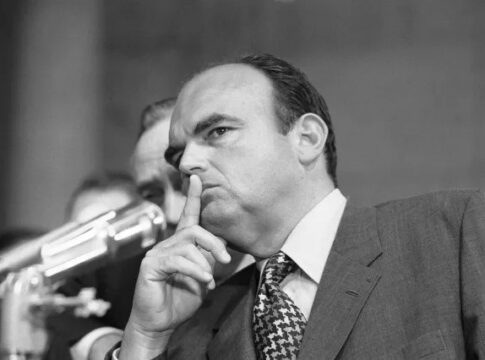
Mark Fuhrman’s death reopens one of America’s most corrosive police credibility scandals, because the evidence that made him famous also made him a symbol of public distrust.
How Fuhrman Became the Trial’s Most Damaging Witness
Mark Fuhrman was one of the first detectives sent to investigate the 1994 killings of Nicole Brown Simpson and Ronald Goldman, and his name quickly became tied to the trial’s most memorable piece of physical evidence: the bloody glove found at Simpson’s estate [2][3]. That discovery placed him at the center of a case that already carried enormous racial and political tension, turning a police witness into a national flashpoint.
The defense used that role to challenge not just Fuhrman’s testimony but the integrity of the investigation itself. News summaries say defense attorneys aired recordings in which Fuhrman repeatedly used racial slurs, directly undercutting his denial that he had used such language in the previous decade [3][5][6]. The result was bigger than a personal embarrassment. It gave the defense a way to argue that bias had infected the handling of evidence.
Why the Perjury Plea Still Matters
After the trial, Fuhrman pleaded no contest in 1996 to a felony perjury charge tied to false testimony about his use of racial epithets [1][3]. That outcome mattered because it locked in the public view that the case was not only about Simpson’s guilt or innocence, but also about whether a police witness had lied under oath. In a system already strained by low trust, that kind of conviction leaves a lasting mark.
The supplied reporting does not prove the defense’s accusation that Fuhrman planted evidence, and it should be treated as an allegation rather than a settled fact [2][3][5][6]. What the record does show is enough on its own: a detective whose credibility was shattered on the stand, followed by a perjury plea and a long afterlife in crime commentary and true-crime writing. That combination made him a permanent part of the case’s public memory.
Death Report Revives Old Frustrations About Institutions
Multiple outlets say the Kootenai County coroner’s office confirmed Fuhrman died on May 12, and some reports add that he died of an aggressive throat cancer [3][7]. The exact medical file was not included in the supplied research, so the cause of death should be treated as reported rather than independently verified here. Still, the announcement is less about the illness than about the legacy of a case that never stopped shaping distrust in institutions.
🚨 Mark Fuhrman, Dead at 74 – For those of us who Followed the OJ Simpson Trial – Fuhrman became a Key figure in the Trail – As a LA Police Detective, he found the infamous Glove at Simpson’s Home (Fuhrman’s Cause of death; throat cancer) 🌴🇺🇸 https://t.co/1zxKU4AI9g
— Mike Burton (@MikeGBurton) May 18, 2026
For many Americans, the Fuhrman story fits a broader pattern that crosses party lines: people see powerful institutions protecting insiders, controlling the narrative, and leaving ordinary citizens to sort through fragments after the fact. Supporters of law enforcement saw a detective destroyed by public scandal; critics saw a case exposed by misconduct and bias. Either way, the death of the man at the center does not end the questions his testimony raised.
Sources:
[1] Web – Mark Fuhrman – Wikipedia
[2] Web – Mark Fuhrman – Famous Trials
[3] Web – Mark Fuhrman, LAPD detective at center of controversy in OJ … – 6ABC
[5] YouTube – Ex-LAPD detective at center of OJ Simpson trial dies at 74
[6] YouTube – Mark Fuhrman, LAPD detective at center of controversy in …
[7] Web – Who Was Mark Fuhrman? Life After the O.J. Simpson Trial, Cause of …